
Computerized Embroidery Machine Guide: How Many Heads and Which Attachments You Need
Computerized Embroidery Machine Guide: How Many Heads and Which Attachments You Need
If you are planning to open an embroidery workshop or expand your factory, the first question you will face is: how many heads do I need? Right after that: how many needles, and which attachments does my work require? This guide explains how to choose a computerized embroidery machine that fits your order volume and the kind of pieces you produce, before you talk about price.
How does a computerized embroidery machine work?
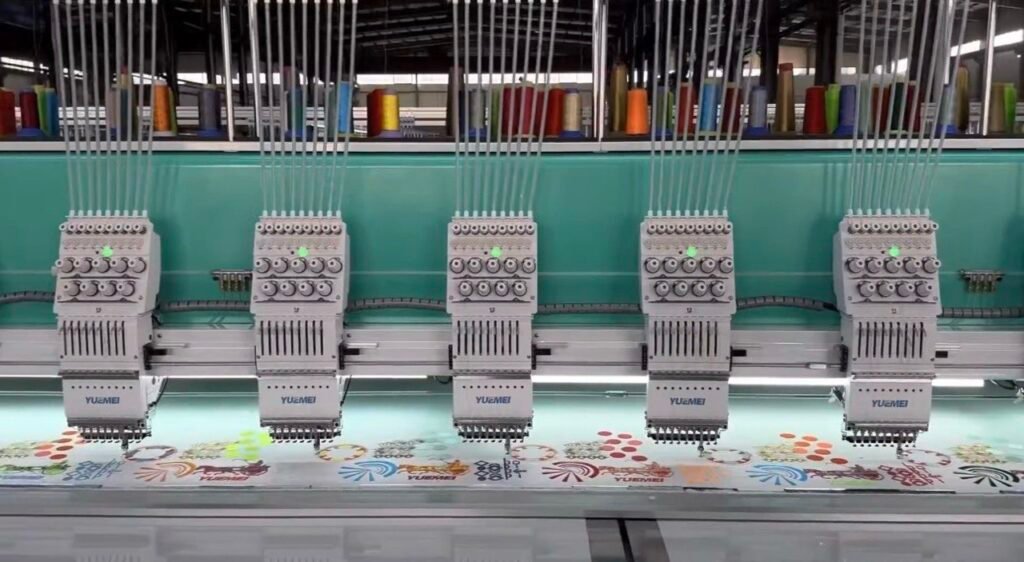
A computerized embroidery machine reads a ready design file (usually in DST format) and stitches it out one stitch at a time. Each head embroiders one piece, and all heads run the same design at the same time, so a 12-head machine produces 12 pieces per cycle.
Each head carries a set of needles, each threaded with one color. The machine switches between needles automatically according to the design, so the number of needles is the maximum number of colors you can stitch without stopping to change threads.
How many heads do you need?
The number of heads should follow your recurring order volume, not the largest order you might receive once a year. A rough rule:
| Heads | Suited to | Notes |
|---|---|---|
| 1 to 2 heads | Small workshops, samples, custom logos and names | High flexibility and quick design changes, limited output |
| 4 to 8 heads | Medium workshops, shop orders and uniforms | A balance between flexibility and output |
| 12 to 20 heads | Garment factories, wholesale orders and large repeat runs | Highest output per design, needs steady orders |
| Multi-head roll and quilting machines (30+ heads) | Quilts, home textiles and fabric by the meter | Work on a full fabric roll instead of separate pieces |
Example: if most of your work is children’s wear in runs of 200 to 500 pieces per model, a 12- or 18-head machine finishes the order in days rather than weeks. If your work is different logos for each customer in small quantities, two small machines beat one large machine, because each can run a different design.
Machines we supply include the 18-head / 9-color industrial embroidery machine for garment factories and the 34-head roll quilting and embroidery machine for quilts and home textiles.
How many needles (colors) do you need?
- 9 needles: enough for most garment and standard logo work.
- 12 needles: for more colorful designs, or to keep the colors of two orders loaded at once.
- 15 needles: for complex, multi-color artistic embroidery.
More needles mean fewer stops for thread changes, and every stop is lost production time.
Embroidery area and head spacing
The distance between heads sets the widest design you can stitch on a single piece. Machines for small garment areas (chest, sleeve, pocket) have tighter spacing, while jacket backs, abayas and bed sheets need wider spacing. Before choosing, measure the largest design you usually produce and make sure it fits the frame.
Attachments: what does your work need?
Attachments mount on the machine heads and open new types of work. Order them according to the market you sell in:
- Sequin device: applies sequins automatically, in high demand for children’s wear, evening wear and abayas. Available single or double (two colors or sizes).
- Bead device: places small beads within the embroidery for premium pieces.
- Cording / taping device: fixes a cord or tape onto the fabric for raised designs.
- Chenille / chain-stitch head: for soft, raised embroidery such as team and school logos.
- Automatic thread trimming and thread-break sensor: now standard on any modern machine, saving operator time and reducing rejects.
Practical tip: don’t order every attachment at the start. Begin with what your customers actually ask for (usually sequins) and add more as the market requires.
Before you buy: 5 things to plan for
- Power: outages and voltage fluctuations affect the control board, so plan a voltage stabilizer or UPS sized to the machine.
- Space: machines of 12 heads and more are several meters long; measure the floor and the walkway around the machine before ordering.
- Design software and operator: the machine needs digitized files, either from an in-house designer or an outside digitizer.
- Threads and materials: good thread and the right backing for the fabric sometimes affect stitch quality more than the machine itself.
- Spare parts and maintenance: ask about the availability of needles, bobbins and boards, and who repairs the machine if it stops.
Frequently asked questions
Are computerized embroidery machines available in Syria?
We supply them imported on order, configured by number of heads, needles and attachments, and we help you choose the right model before ordering.
How much does a computerized embroidery machine cost?
Prices vary widely with the number of heads, needles, attachments and embroidery area. Send us your type of work and quantities on WhatsApp +963 935 110 947 and we will send you an offer for the right model.
Where is the company located?
Our office is in Aleppo, Al-Jamiliya, and we ship to all Syrian governorates.
Do you provide installation, training and maintenance?
Yes. We handle installation, commissioning and operator training, and provide after-sales service and spare parts.
Choose the right machine the first time
An embroidery machine is a long-term investment, and the right choice starts with your own work: the pieces, the quantities and the market you sell in. Browse our embroidery machines category, or contact us directly on WhatsApp +963 935 110 947 and our engineer will recommend the right machine.